
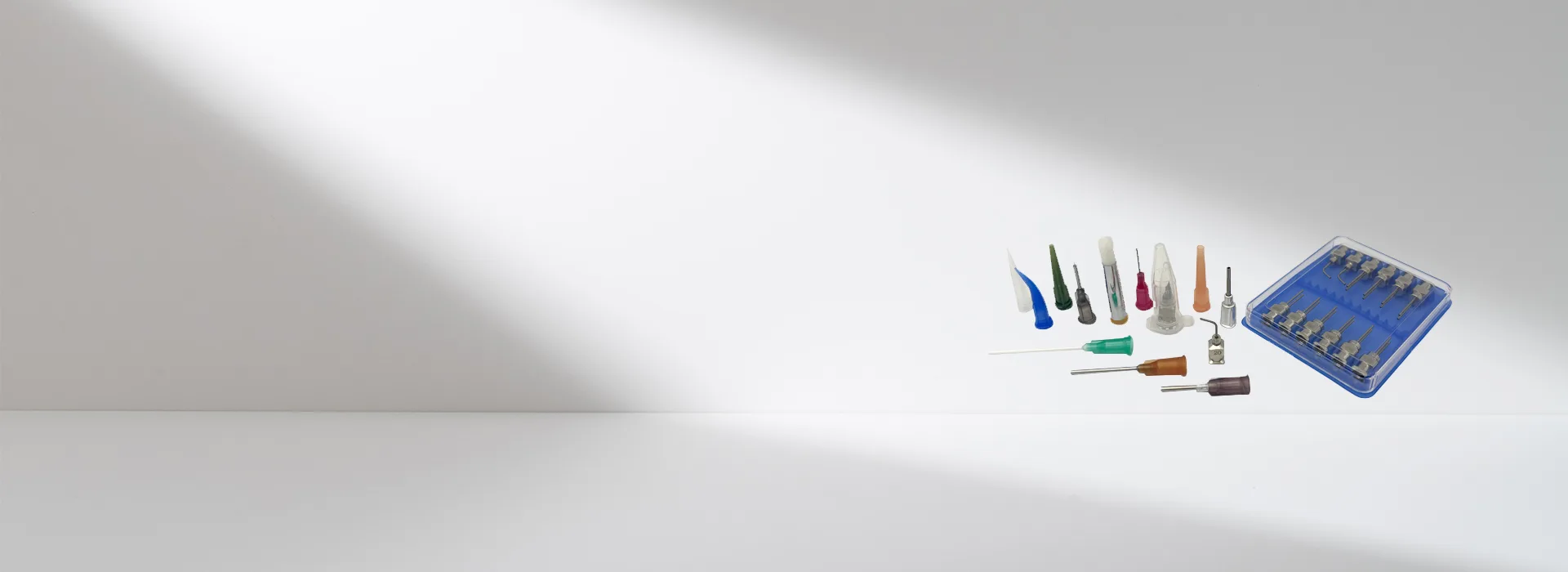

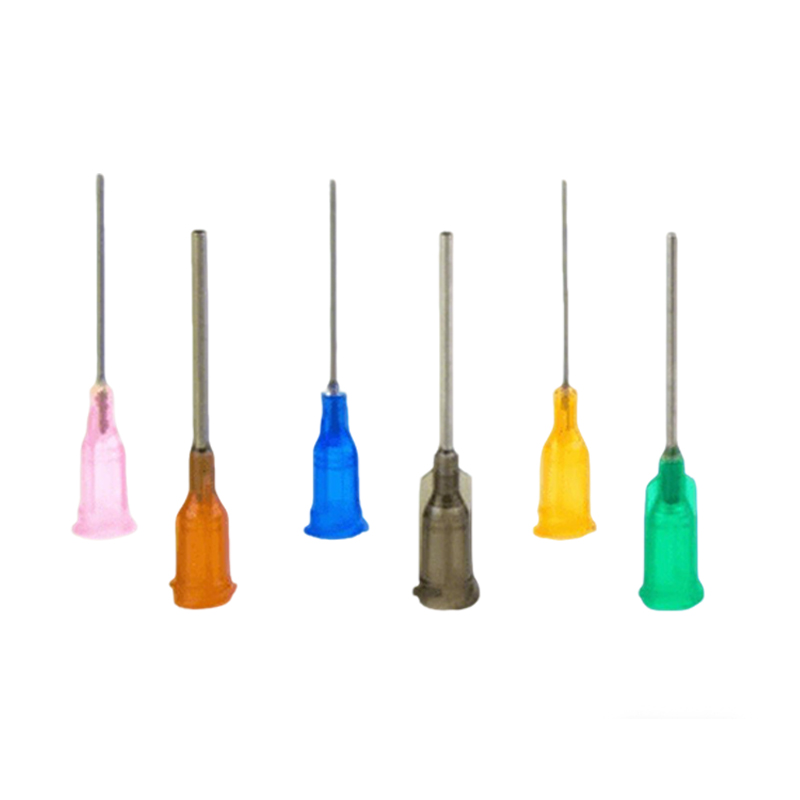
Our adhesive dispensing tips and dispensing needles come in multiple types, materials and sizes. Each tip undergoes quality control checks during manufacturing. Selection depends on fluid viscosity, required bead width, dispensing pressure and equipment interface. Each type is available in multiple gauge and length options. For detailed specifications on specific tip types, see the relevant product pages or download the dispensing tips catalog.

Enables smooth dispensing of medium- to high-viscosity materials with reduced backpressure design.
Learn More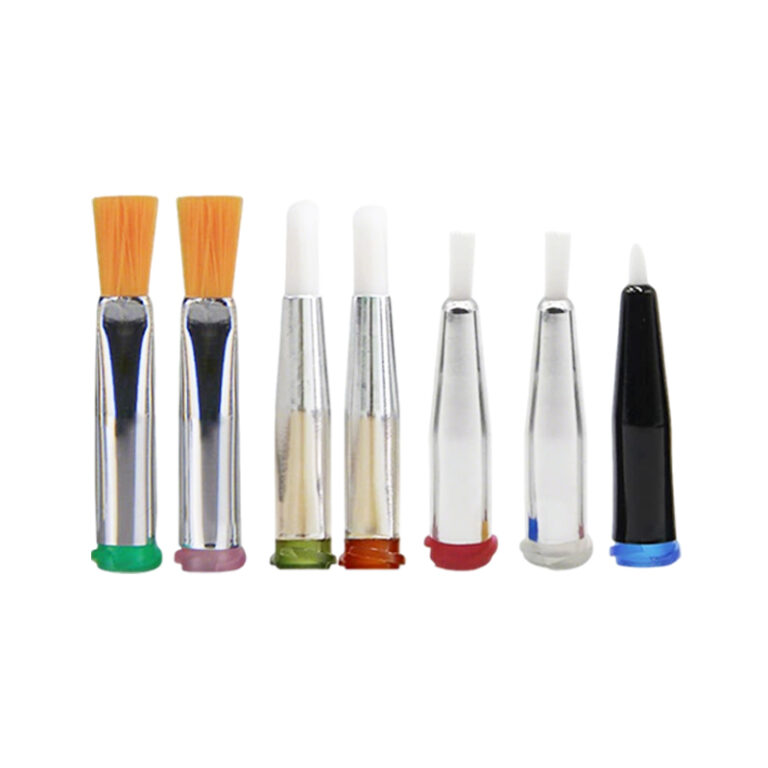
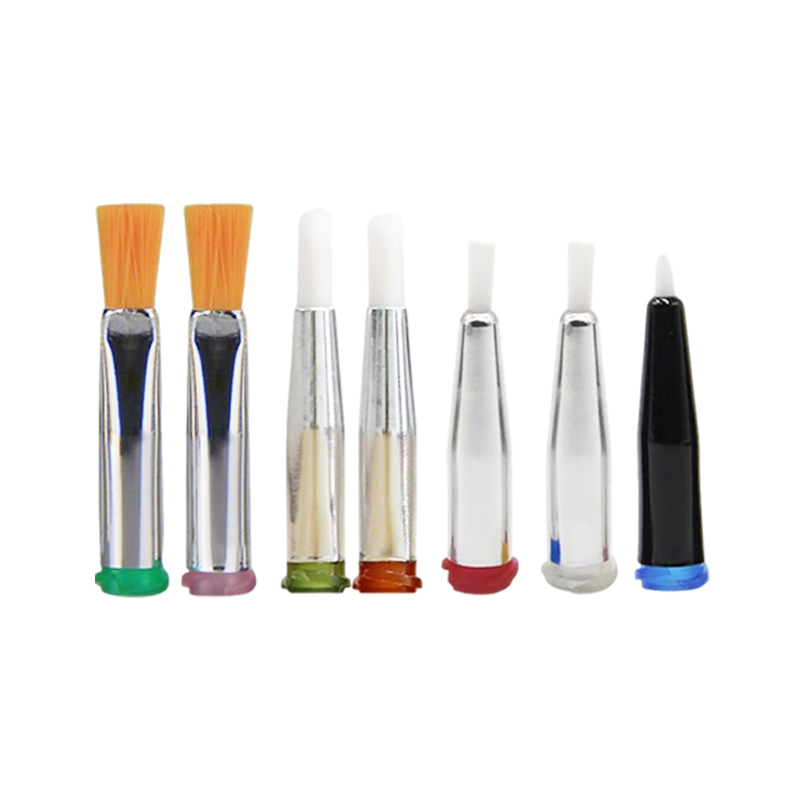
Used as glue dispensing tips for brushing, coating and spreading low-viscosity adhesives, primers and fluids.
Learn More
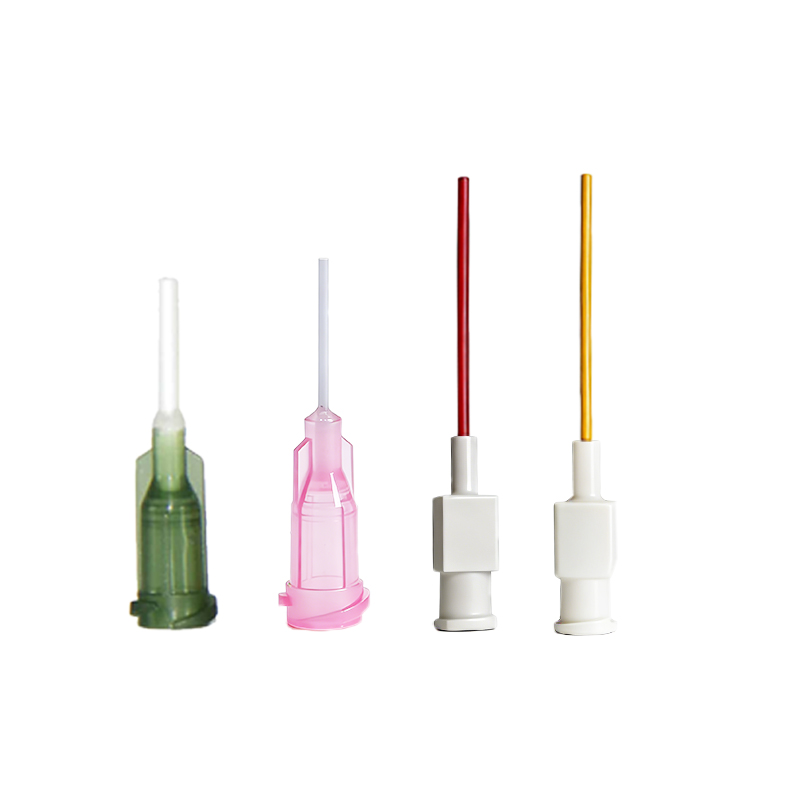
Ensures chemical resistance and reliable anti-clogging with PTFE-lined stainless steel construction.
Learn More
Allows scratch-free dispensing in sensitive environments with flexible PP structures.
Learn More
General-purpose dispensing needle tips with 304 stainless steel cannulas and polypropylene Luer Lock hub.
Learn More
Creates uniform wide adhesive lines using elongated oval outlet design.
Learn More
These metal dispensing tips provide high mechanical strength and dimensional stability for demanding dispensing environments.
Learn More
Delivers high-accuracy flow control with durable integrated or split nozzle structures.
Learn More
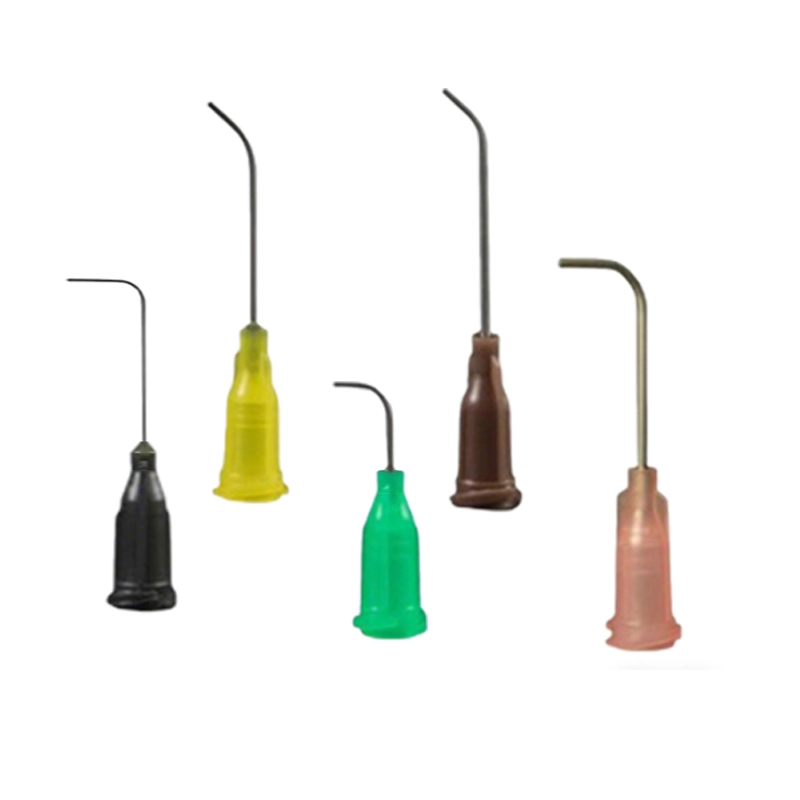
Enables precise dispensing in hard-to-reach areas with 45° and 90° configurations.
Learn MoreThe right dispensing tip is selected by fluid viscosity, required bead size, dispensing pressure, surface condition and equipment interface. Low-viscosity adhesives, medium-viscosity silicones, high-viscosity epoxies and particle-filled materials may require different gauge sizes, inner diameters and outlet geometries. Btektech can help buyers match dispensing needle gauge, ID, OD, length, material and outlet shape to the adhesive dispensing process.

Vibratory finishing reduces residual particles at the needle tip and minimizes clogging risk.

Standard Luer Lock base enables quick and stable connection and reduces adhesive leakage during operation.

Color-coded hubs help operators identify gauge sizes and reduce selection errors during production.

Selected models use anti-static and light-shielding materials to protect sensitive or reactive fluids.
For industrial adhesive dispensing, small differences in bore size, burrs, hub alignment or tip length can affect bead consistency and clogging risk. Btektech controls dispensing tip production through dimensional checks, visual inspection, bore cleanliness control and packaging consistency to support repeatable dispensing needle performance in manual and automated dispensing processes. Every batch undergoes an airflow test to verify there is no residual blockage or processing debris in the inner bore. Where required, batch numbers, part numbers and production dates can be added to packaging to support process control and traceability.


Our OEM program allows you to customize needle type, gauge, length and material to meet your process requirements. Each dispensing needle is precisely designed to support smooth fluid flow and minimize waste. Our ODM program allows structural adjustments based on adhesive viscosity, pressure limits and equipment constraints. Small-batch validation can be performed before mass production to confirm dimensional matching and dispensing performance. For custom dispensing tips or OEM dispensing needles, provide fluid type, viscosity range, target bead size, equipment interface, required length, material preference and expected order quantity. Btektech supports sample selection, drawing-based development and bulk supply for adhesive manufacturers, distributors and dispensing equipment companies.
Compare dispensing tip types, gauge options, materials, Luer Lock compatibility and custom needle configurations.
View Btektech’s adhesive dispensing components, including nozzles, cartridges, barrels, guns, tips and accessories.
Learn how to select dispensing tips, prevent clogging and improve adhesive dispensing process stability.
Btektech adhesive dispensing tips and dispensing needles have been used in actual production environments across electronics assembly, automated adhesive application and specialty bonding processes.

Result: Production continued consistently across shifts with stable bead output and no equipment modifications required.

Result: Controlled adhesive delivery and stable operation throughout continuous automated manufacturing.
Delivers high-accuracy flow control with durable integrated or split nozzle structures.
Check Now →
Enables smooth dispensing of medium- to high-viscosity materials with reduced backpressure design.
Check Now →
Enables precise dispensing in hard-to-reach areas with 45° and 90° configurations.
Check Now →
General-purpose dispensing needle tips with 304 stainless steel cannulas and polypropylene Luer Lock hub.
Check Now →A dispensing tip is the outlet component that controls how adhesive, epoxy, CA, sealant or other fluids leave a syringe, cartridge, valve or dispensing system. In many purchasing searches, adhesive dispensing tips may also be described as glue dispensing tips, dispensing needles or adhesive dispenser needles depending on the application.
In industrial adhesive dispensing, the tip affects bead size, dot accuracy, flow resistance, clogging risk and contact with the work surface. Buyers typically select dispensing tips by gauge, inner diameter, length, material, outlet shape and compatibility with the dispensing equipment.
The adhesive dispensing tip is the final exit point of the fluid delivery system. It does not control dispensing pressure or timing, but it determines the flow resistance and exit geometry. If the inner diameter is mismatched, dispensing volume changes. If the outlet shape is wrong, bead cross-section changes. Selecting the correct dispensing needle helps maintain target bead width and support consistency across production runs.
A dispensing tip consists of three main parts: the inlet interface, the bore channel and the outlet geometry. The inlet interface connects to Luer Lock, threaded or push-fit valves. The bore channel controls volumetric flow rate at a given pressure, with material options including stainless steel for abrasive fluids, PP for low-viscosity adhesives and PTFE for chemical-resistant applications. The outlet shape — straight, tapered or oval — determines bead geometry. Small-diameter bores increase backpressure; longer needles increase pressure drop along their length.
Dispensing tip selection depends on fluid viscosity, bead width, dispensing speed and surface conditions:
How do I choose the right dispensing tips for my adhesive?
Select dispensing tips based on fluid viscosity, target bead size, dispensing pressure and equipment interface. Low-viscosity adhesives such as CA often work well with PTFE-lined dispensing needles. High-viscosity epoxy, glue or filled adhesives typically require tapered dispensing tips with larger inner diameters. Confirm gauge, length and outlet shape through sample testing before committing to production quantities.
Are your dispensing tips compatible with standard Luer Lock dispensing systems?
Most Btektech adhesive dispensing tips use a standard Luer Lock interface compatible with ISO 594-compliant syringe barrels, valves and adapters. Luer slip options are also available. For pneumatic or automated dispensing systems, confirm the hub type and connection format before ordering to avoid leakage or pressure loss during production.
What is the difference between tapered, blunt and PTFE dispensing needles?
Blunt dispensing needles suit general dot and bead applications. Tapered dispensing tips reduce backpressure for medium- to high-viscosity adhesives and particle-filled fluids. PTFE dispensing needles resist chemical adhesion and are preferred for cyanoacrylate and reactive adhesives. Tip type selection depends on fluid chemistry, required flow resistance and clogging risk in your specific dispensing process.
Can Btektech manufacture custom dispensing tips for OEM applications?
Yes. Btektech supports custom dispensing tips and OEM dispensing needles with options for gauge, inner diameter, length, material, outlet style and packaging. To begin, provide your fluid type, viscosity range, target bead size, equipment interface and monthly quantity. Sample validation is available before mass production to confirm dimensional fit and dispensing performance.
What makes Btektech a reliable dispensing tips manufacturer and supplier?
Btektech controls dispensing tip production through dimensional inspection, bore cleanliness checks and airflow testing on every batch. Controlled tolerances on inner diameter and needle length help maintain consistent flow across replacements in continuous production. Bulk supply, OEM packaging and batch traceability are available for adhesive manufacturers, distributors and dispensing equipment companies.